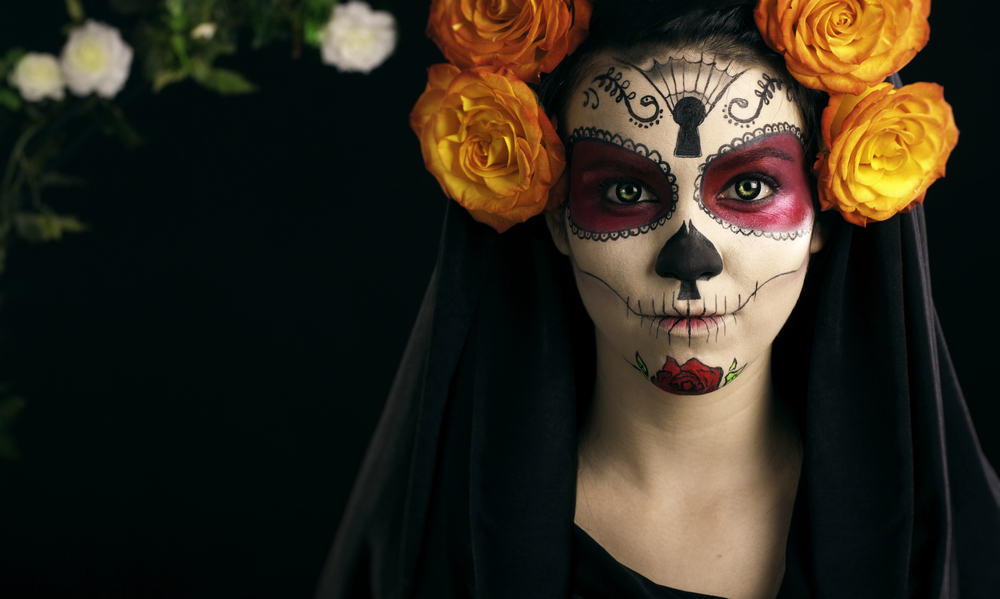
Sugar skull makeup—often seen around Halloween and early November—is more than a hauntingly beautiful face design. It’s a vibrant, heartfelt tribute to loved ones who have passed, rooted in the centuries-old Mexican celebration of Día de los Muertos, or the Day of the Dead.
Beneath the colors and artistry lies a story of remembrance, culture, and joyful connection between the living and the departed.
In this post we’ll cover the history and meaning behind the sugar skull, and the elements of the makeup so you can put together your own unique sugar skull look.
What Is the Day of the Dead?
You can’t do sugar skull makeup without understanding the Day of the Dead. Celebrated on November 1st and 2nd, Día de los Muertos merges pre-Hispanic Aztec rituals with Catholic traditions introduced by Spanish colonists.
It is not Mexico’s version of Halloween but rather a time to honor ancestors and loved ones who have died. Families decorate graves, build altars, cook favorite foods, and share stories—believing that during these days, the spirits of the dead return to visit and celebrate with the living.

What Is a Sugar Skull?
Sugar skulls, or calaveras de azúcar, are decorative skulls made from molded sugar and brightly colored icing. They are a key symbol of the Day of the Dead, representing the sweetness of life and the individuality of each soul remembered.
Traditionally, families place these handmade skulls on home altars (ofrendas) alongside candles, marigolds, food, and photos to welcome spirits back for a brief reunion.
What Is a Calavera?
The term calavera simply means “skull” in Spanish, but culturally it has come to represent both the decorated sugar skulls and artistic portrayals of skeletons in Mexican folk art.
Calaveras appear in everything from papel picado banners to poems and satirical illustrations—each a playful nod to mortality that reminds us to celebrate life rather than fear death.
Who Is La Catrina?
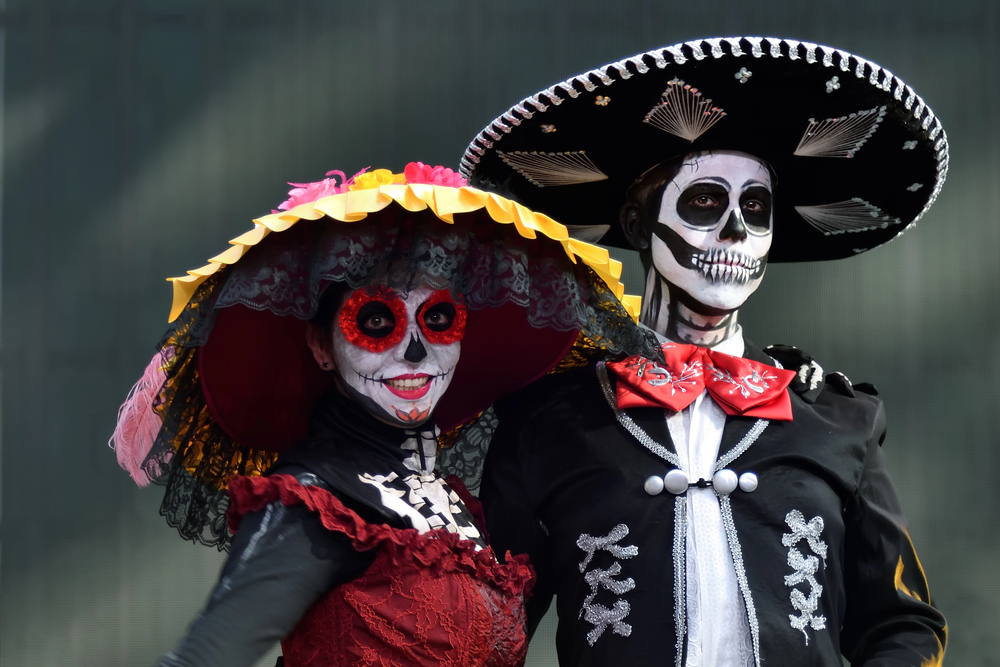
La Catrina, the elegantly dressed female skeleton in a broad feathered hat, is one of the most recognized figures of the Day of the Dead.
Originally drawn by Mexican artist José Guadalupe Posada in the early 1900s as La Calavera Garbancera, she was later named “La Catrina” by painter Diego Rivera.
She satirized the vanity of Mexico’s upper class who sought to appear European—but over time, she became a symbol of equality in death and a muse for the beauty of calavera imagery.
Today, many sugar skull makeup looks are inspired by her graceful style.
Why Sugar Skulls?
The use of sugar stems from 17th-century Catholic missionaries who taught locals to mold religious figures from sugar, a cheap and abundant material in colonial Mexico.
Over time, this practice merged with Indigenous beliefs about honoring the dead, resulting in the colorful sugar skulls we know today.
Each skull is unique, often bearing the name of the departed on its forehead, symbolizing remembrance, love, and individuality.
The Basics of Sugar Skull Makeup
Creating sugar skull makeup is both an art and a cultural homage. While modern interpretations vary, it’s best approached with respect for its Mexican roots.
- Start with a white base — Use face paint or cream makeup to create a smooth, skull-like canvas.
- Outline the eyes and nose — Traditional designs feature large, hollow “eye sockets” outlined in black, often filled with bright colors or floral motifs. Also draw on a black nose, where it would be missing on a skeleton.
- Add decorative patterns — Swirls, filigree, hearts, cobwebs, and marigold shapes symbolize life, love, and remembrance.
- Accentuate the mouth — The stitched smile mimics a skull’s teeth, often outlined with lines extending toward the cheeks.
- Use vibrant colors — Blues for peace, reds for love, yellows for the sun and marigolds, and purples for mourning and spirituality.
- Embellish creatively — Rhinestones, glitter, flowers, and even real marigolds add festive flair and individuality.
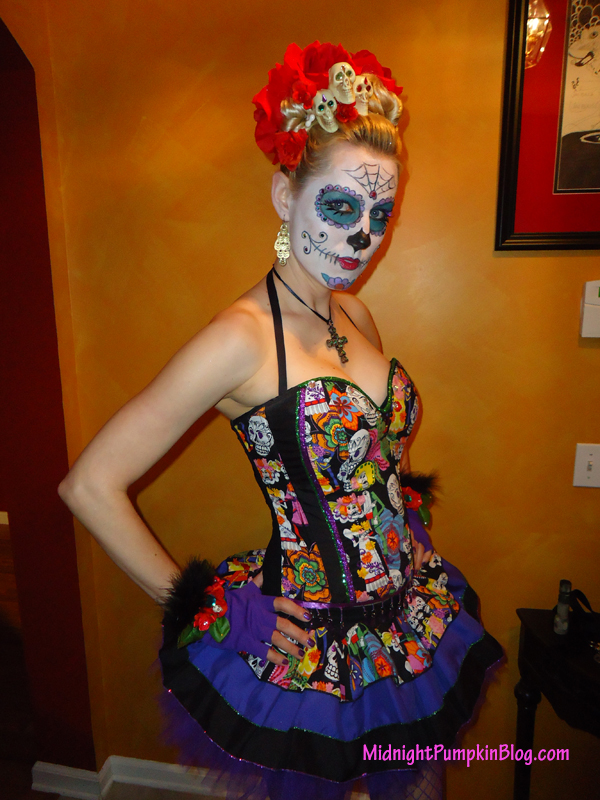
Below is my own sugar skull design and costume I made one year for Halloween & Day of the Dead-
Elements Found on Sugar Skulls
Each element carries symbolism:
- Flowers – Especially marigolds (cempasúchil), which guide spirits with their scent and color. Flowers are often done around the eyes and on the chin.
- Hearts and crosses – Represent love and spiritual faith.
- Webs or spirals – Reflect life’s cyclical nature and the connection between life and death. The forehead is a great spot for a spiderweb.
- Bright colors – Express joy, vitality, and the celebration of memory.
- Stitched smile– Stitches or skull teeth around the mouth.
A Living Art of Remembrance
Sugar skull makeup is more than costume—it’s living art that bridges generations. Every painted face is a reminder that death isn’t the end, but part of a shared human story celebrated with laughter, music, and color.
Whether worn during a festival parade or as personal expression, it embodies the same message the Day of the Dead carries: we live on through love and remembrance.





 The Midnight Pumpkin Blog
Leave a reply to Village People and the Costumes that Made Disco History – The Midnight Pumpkin Blog Cancel reply