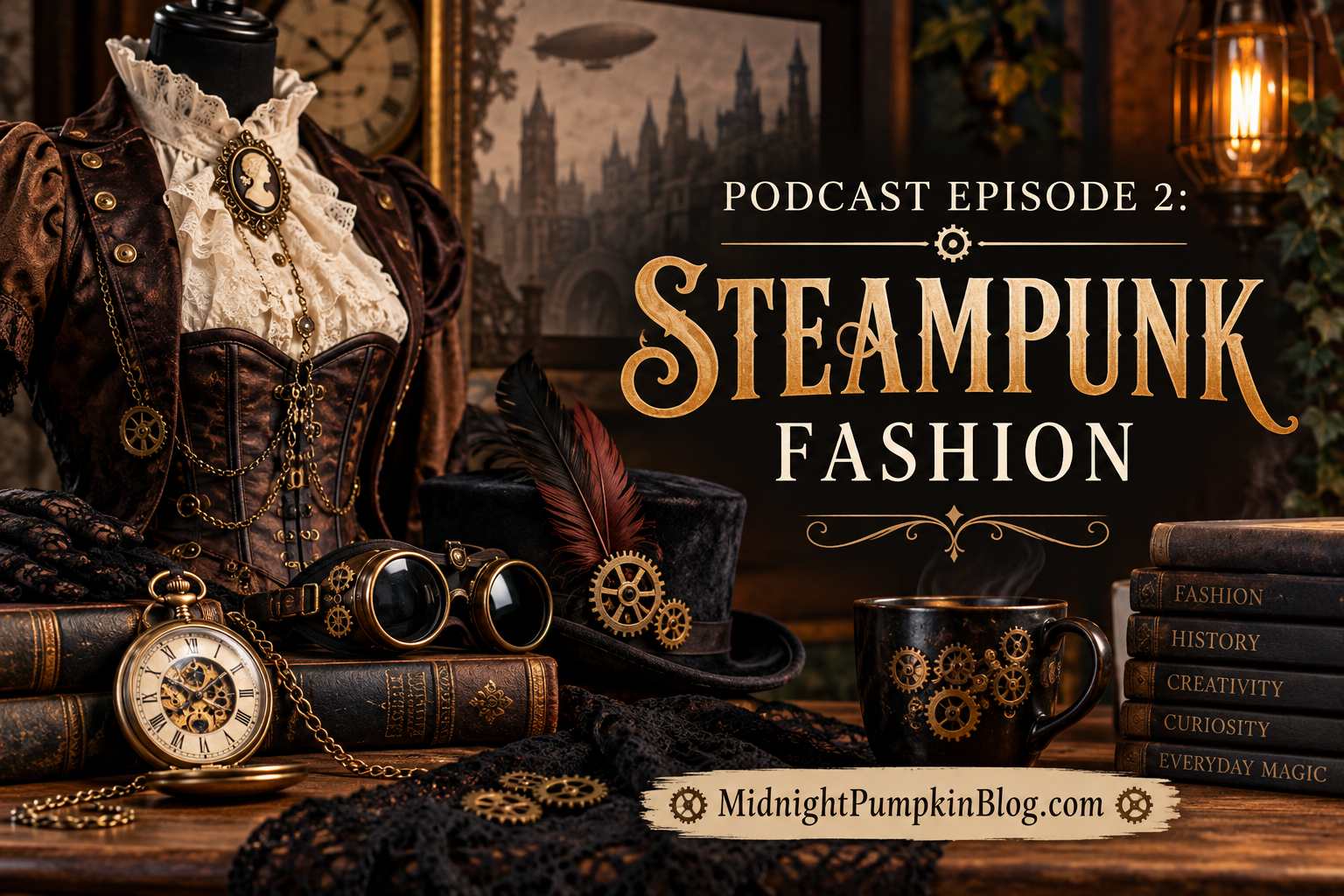
Pip: Welcome back to The Midnight Pumpkin Blog podcast, where tonight we’re strapping on our brass goggles and asking the serious question: what happens when Victorian elegance meets industrial fever dream?
Mara: Candy Keane has been exploring exactly that — steampunk as a full creative movement, from its literary roots and fashion vocabulary to where it lives today in cosplay and convention culture. Let’s start with the style itself and what makes it tick.
Steampunk Fashion: Where Past and Future Collide
Mara: Steampunk sits at a genuinely unusual intersection — it’s historical and futuristic at the same time, and the post opens by asking what that actually means as a wearable aesthetic, not just a genre label.
Pip: The post puts it directly: “In a world where corsets and clockwork collide with invention and imagination, steampunk has carved out a space all its own.”
Mara: That collision is the whole point. Steam-driven technology, Victorian silhouettes, and speculative alternate history fused into something you can actually wear to a convention.
Pip: And the post is honest about the reputation problem. Sometimes humorously labeled “goths who wear brown” — which, fair — but the argument is that the aesthetic runs much deeper than a color palette swap.
Mara: The literary lineage matters here. Jules Verne and H.G. Wells are named as direct ancestors — their tales of futuristic machinery laid the foundation before steampunk was even a word.
Pip: So airships and automatons roaming fog-filled streets aren’t just decoration. They’re inherited from a whole tradition of imagining what the 19th century could have become.
Mara: The post then breaks down the actual fashion elements methodically. Victorian foundations come first — corsets, bustled skirts, and high-collared blouses for women; waistcoats, tailcoats, and frock coats for men. Structured, dramatic tailoring throughout.
Pip: Then the accessories do the real work of signaling the genre. Brass goggles, top hats, pocket watches, gear-inspired jewelry — these aren’t afterthoughts.
Mara: Right. The post calls them “the defining statement pieces that transform a Victorian outfit into something imaginative and alternative.” Industrial details like leather harnesses and clockwork motifs push it from historical costume into retro-futuristic storytelling.
Pip: And cosplay is where the creative freedom really opens up. The post describes reimagining known characters through a Victorian-industrial lens — a futuristic warrior becoming an airship captain, a fantasy heroine redesigned as a mechanically enhanced adventurer.
Mara: There’s even a personal example: a steampunk version of Power Girl, built from riveted belts, a lace choker cameo necklace, a corset, petticoat, brass details on the cape, and goggles just out of frame.
Pip: The closing note is genuinely warm — steampunk keeps pulling the writer back because of the creative room it allows.
Mara: The throughline here is that steampunk is less a costume and more a creative argument — that history and imagination can share the same silhouette.
Pip: Next time, we’ll see what other corners of that imagination the blog wanders into. Keep the goggles handy.

Leave a Reply